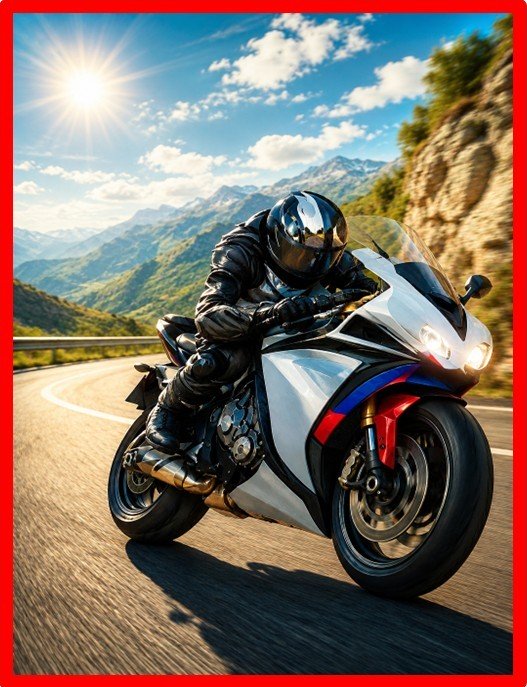
What is it about motorbiking that’s so addictive? At first glance, it looks suspiciously like an attempt to reach a personal tipping point between self-preservation and self-destruction. The only things arguing in favor of survival are the rider’s real – or imagined – skills, and his or her remarkable ability to deny reality.
That said, the Philippines is an excellent country for motorcycling. Roads and scenery vary endlessly, the riding season lasts all year, and snow is mercifully absent. Wherever you go on two wheels, locals generally view a foreign rider with curiosity and goodwill. Buying or renting any kind of motorcycle is relatively cheap, too.
Whether you’re a beginner or a seasoned rider, boredom is not something you’ll encounter on the roads of the Philippines. Motorcycling lets you see the world from a different angle, reach places you’d never otherwise find yourself, and stumble into situations no itinerary could plan. Every time you swing a leg over the seat, there’s a promise of adventure.
And yes, motorcycling is about more than adrenaline and thrills. It’s a constantly evolving skill that demands focus, situational awareness, and – most importantly – an honest understanding of your own limits, paired with just enough belief in your own abilities.
Size Matters
In the Philippines, recreational motorcycling falls roughly into three categories. Each has its own advantages and limitations, but they all share one thing: the freedom to go wherever you want, whenever you want – at least for a while.
Small scooters are perfect for cities and tourist areas. Automatic scooters are easy to ride and require little more than knowing how to twist the throttle and squeeze the brakes. Most tourist destinations and cities have rental shops offering scooters for just about every budget and purpose.
When the urge hits to go farther and see what the main roads don’t show, it’s time to grab an enduro bike (also known locally as a dirt bike). Riding an enduro demands more skill and experience, especially when you start following random trails into remote areas just to see where they go.
And if you believe a motorcycle should have power, presence, and a relaxed riding position, you enter the world where people whisper – admiringly or mockingly – about those legendary two letters: HD (Harley-Davidson). Big bikes shine on highways and paved roads. Long distances become comfortable, passing maneuvers are effortless, and the ride is stable, smooth, and undeniably dramatic.
The Art of Staying Alive
No amount of rational thinking can erase the fact that motorcycling in the Philippines is dangerous. When your own skills – or someone else’s – fail, riders and passengers on two wheels are the first to pay the price. There are no airbags to deploy, no protective cages, and very little passive or active safety.
Traffic operates according to one simple rule: the biggest vehicle wins. That privilege is rarely extended to motorcycles, leaving riders with one overriding responsibility: staying alive. Unpredictable traffic and sudden obstacles mean your head needs to be on a swivel – far more than in countries where traffic rules are taken seriously.
Most foreign-issued driver’s licenses are valid in the Philippines for 90 days from the date of entry. If your license isn’t written in English, an international driving permit or an official English translation is recommended. For longer stays, getting a local license is worth it – it adds credibility with authorities and doubles as a practical form of ID on the road.
Yes, the Philippines has traffic laws, and following them usually doesn’t hurt. If you do end up arguing over interpretations with police or other authorities, situational awareness and humility will get you much further than lecturing anyone about traffic rules back home.
If fines do come into play, you may face a moral and ethical choice: pay the fine officially at the Land Transportation Office or resolve the matter on the spot through the unofficial ‘cash solves problems’ method.
Skill, Luck, and a Bit of Both
No matter what you ride, wear a helmet. On your head – not dangling from your arm to technically comply with helmet laws while protecting your elbow instead.
Especially in rural areas, it’s worth remembering that an ambulance won’t arrive instantly to patch you up. You’re often on your own with your first-aid skills and whatever you carry. Superglue and duct tape have saved more than one life in places where help doesn’t come and Band-Aids won’t be enough.
Shorts and a T-shirt may feel convenient for quick rides, but even then, protect any skin exposed to the sun. On a bike, sunburn happens fast and you usually realize it only when the damage is done. Burned hands and feet are a dead giveaway of a rookie rider.
At sunset in rural areas, insects come alive. Open-face helmets have their perks, but they become far less pleasant when riding through swarms of bugs at dusk – when creatures of all sizes start smacking into your mouth and eyes. A single beetle to the eye can blind you permanently.
By law, the blood alcohol limit for motorcyclists in the Philippines is zero. In practice – especially in rural areas and smaller towns – enforcement is minimal, leaving sobriety to personal judgment. Before exercising that judgment, it helps to remember that a foreigner involved in an accident is effectively defenseless in court if there’s even a trace of alcohol involved.
Always carry insurance that covers not only your own injuries but also damage to the bike and third parties. When locals are involved, questions of legal responsibility and compensation tend to be resolved in favor of whoever has more money and speaks the local language more fluently.
Leather Vests and Club Life
Then there’s the world where everything is bigger and rougher. Motorcycle clubs offer a chance to meet like-minded people, swap stories, and collect unforgettable experiences. Group rides also introduce you to new routes and riding styles across the country.
The Philippines has around 300 registered motorcycle clubs, ranging from relaxed Sunday cruise groups to tightly structured organizations. Many work with the Philippine National Police Highway Patrol Group (HPG) to promote traffic safety and education.
The most famous club in the Philippines is the Mad Dog Motorcycle Club (MDMC), founded in 1994. Their culture is built around brotherhood – leather vests, strict rules, and earned respect. Membership is by invitation only, and wearing their colors requires far more than a big bike and a few tattoos. MDMC chapters also exist in Thailand, Singapore, Japan, Hong Kong, and China.
In recent years, a vibrant custom bike scene has also emerged. Cheap, small-displacement motorcycles are transformed down to the smallest detail into café racers, bobbers, choppers, and all kinds of mechanical eye candy.
Playing the Last Card
Regular motorcycling has also reshaped my own daily life, adding what a poet might simply call LIFE. I learned the basics on the island of Palawan, where I spent my first ten years in the Philippines, essentially living on an enduro bike. After moving to Manila, I continued leading motorcycle safaris in Palawan for riders from all over the world.
These multi-day trips varied wildly depending on the group’s wishes and skill levels – from relaxed Sunday rides to full-blown survival adventures on roadless stretches and mountain trails through the jungle, where we were often desperately trying to find the trail in the first place.
Every rider eventually faces the day they hang up their gloves up for good – by choice. For me, that day came shortly before the pandemic, when my personal expiration date as a motorcyclist arrived during my first – and last – serious accident on what was supposed to be a casual Sunday ride.
I entered a gentle curve with too much speed and drifted onto loose gravel, where saving the bike was no longer an option. I remember deliberately laying the bike down into a ditch and instinctively trying to steer it back onto the road. Unfortunately, the ditch was cut across by a small side road and a concrete culvert, which I hit at full speed. My next memory is lying on the ground in a cloud of dust.
I flew like a wounded duck but landed like Gladstone Gander. The borrowed enduro bike was destroyed, but I escaped with surprisingly minor injuries: a few broken ribs, a sprained wrist, and a bruised kidney. The biggest hit was to my ego when I had to ask myself the most painful question of all: “How do you even crash in a place like that?”
Had I continued riding and running safaris, age, declining skills, and statistics would eventually have caught up with me. Another accident would have been inevitable – and I likely wouldn’t have been as lucky. So I hung up my gloves.
It was a heavy decision: one I’ve wrestled with in recent years. But the future rarely follows plans or wishes. It always gets tangled up with other people’s plans, circumstances, and new opportunities to be delightfully irresponsible.
The Longer the Journey, the Slower the Pace
When I strip motorcycling of its obvious clichés, I end up seeing it as an escape from a life that lacks enough carefree (or reckless) freedom. It offers a world without everyday obligations, but full of possibilities thrown at you by chance.
The feeling of freedom doesn’t come from the machine itself, but from the moment, the mindset, and the environment – the motorcycle just happens to be the tool that brings them together. Riding pushes you beyond the structures of safe, familiar routines. In the saddle, you can briefly feel a freedom that pulls you away from responsibility and into a world of pure possibility, where anything can happen.
Because humans aren’t purely rational creatures, we make life-and-death decisions in fleeting moments without deep reflection. On a motorcycle, those moments rush past constantly – and somewhere in the subconscious, they turn into the realization of just how damn good it feels to be fully alive, using all your senses, even if only for a while.
More on the topic:
Hands Up! — This Is the Philippines
