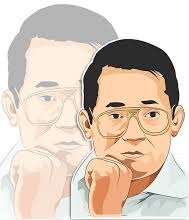
The Philippines lives and breathes its history through its national heroes. Every August 21, the country remembers a man who was shot at Manila’s airport in 1983, in full view of the world. Soldiers were eventually convicted of the murder, but the identity of the person who ordered it remains unknown – and it was in that fog of uncertainty that Benigno Aquino died and Ninoy was born.
Every Filipino knows Ninoy Aquino. His portrait appears on the 500-peso bill, Manila’s international airport has borne his name for decades, and his most famous declaration has become part of the country’s political scripture: “The Filipino is worth dying for.”
Benigno “Ninoy” Aquino Jr. is one of the most modern political figures to be widely embraced as a Filipino national hero. He is also a very Filipino kind of hero: brave and contradictory, admired and disputed, at once a human being and a story told about one.
In 2004, President Gloria Macapagal Arroyo signed a law that made August 21 a nationwide special non-working holiday in memory of Aquino’s assassination. His place in the country’s official commemorative calendar was secure. The man behind the myth remained a far more complicated figure.
The Man Versus the Myth
Was Ninoy the selfless martyr for democracy celebrated today, or an ambitious politician whose death created a cleaner narrative than his complicated life ever could?
Benigno Aquino was unquestionably gifted, courageous, and tragic. He was also the product of one of the country’s most powerful clans, a skillful political operator, and a man who wanted to become president. His critics regarded him as an arrogant opportunist; to his supporters, he was one of the few men willing to challenge Marcos openly when doing so could lead to prison – or worse.
Two opposing things can be true at the same time. Ninoy could be both an ambitious politician and a courageous defender of democracy. He may not always have been a hero, but he may have grown into one – and his death did the rest.
Inside the boxing ring of history, the man and the myth are still fighting. Neither has managed to knock the other out.
Young, Fearless, and Slightly Reckless
Benigno Simeon “Ninoy” Aquino Jr. was born on November 27, 1932, into a wealthy landowning and political family in Tarlac. His father, Benigno Aquino Sr., was a congressman, Speaker of the National Assembly, and an influential – if controversial – political figure. Politics did not enter Ninoy’s life through a crack in the door; it was already sitting at the dinner table.
Aquino studied at Ateneo de Manila University and later took up law at the University of the Philippines, but never completed a degree. At UP, he joined Upsilon Sigma Phi, the same fraternity to which Ferdinand Marcos belonged. They were not, as is sometimes claimed, university contemporaries – Marcos was 15 years older – but they inhabited the same small world of political privilege.
At just 17, Ninoy went to Korea as a war correspondent for the Manila Times. His daring reporting earned him the Philippine Legion of Honor. In his early twenties, he served as an adviser and emissary for Defense Secretary Ramon Magsaysay.
In 1954, Ninoy married Corazon “Cory” Cojuangco. The marriage united two powerful political and landowning clans. In the Philippines, even love can forge a political alliance.
That same year, Aquino helped negotiate the surrender of Huk rebel leader Luis Taruc. The achievement earned him a second Legion of Honor and a reputation as a man who could talk his way through locked doors, even with an armed rebellion waiting behind them.
His political rise was astonishingly fast. He was elected mayor of Concepcion in 1955, although he was initially barred from taking office after a court dispute over his age. He later became vice governor of Tarlac and, in 1961, governor. In 1967, at only 34, he was elected to the Senate as one of the youngest senators in Philippine history.
Head-to-Head with Marcos
As a senator, Ninoy became one of President Ferdinand Marcos’s most vocal critics. He spoke about abuses of power directly, sharply, and often mockingly, while many other opposition politicians preferred to keep their heads down.
Aquino attacked Marcos’s growing authoritarianism, military policies, and corruption. He brought national attention to the alleged Jabidah massacre and positioned himself as a defender of democracy and civil rights.
He was not, however, best known for the tedious work of legislative committees. Ninoy’s natural arena was political theater: speeches, media, exposés, and putting an opponent on the defensive. He was more of a political swordsman than a legislative mechanic.
The struggle between the Aquinos and the Marcoses also involved family wealth and power. Hacienda Luisita, owned by Cory’s Cojuangco family, became the center of a decades-long land-reform dispute. Presenting Ninoy solely as a champion of the poor and landless is therefore too polished a portrait. His own family circle belonged to the landowning elite whose power agrarian reform was supposed to break.
I’m the Good Guy; He’s the Villain
Ninoy never concealed his presidential ambitions. Marcos was the greatest obstacle in his path, and their struggle combined democratic principle, personal ambition, and dynastic power so tightly that no surgeon could separate them.
Before martial law, ordinary Filipinos did not generally regard Aquino as a saint. He was a charismatic opposition leader, but also a representative of the traditional elite and a gifted demagogue who knew how to present himself as the messenger of light and his opponent as the prince of darkness. This did not make him unusual in Philippine politics. It mostly made him a professional.
The confrontation intensified after the Plaza Miranda bombing in August 1971. Two grenades were thrown at a Liberal Party campaign rally in Manila. Nine people were killed and nearly a hundred were wounded. Ninoy, who was expected to attend, had not yet arrived and escaped injury.
Marcos blamed the communists. The opposition suspected the Marcos government. Serious allegations later emerged concerning the involvement of the Communist Party of the Philippines, and some accounts claimed Aquino had advance knowledge of the plot. No conclusive historical evidence has established that allegation as fact. Plaza Miranda remains one of those Philippine events in which almost everyone accused everyone else and nobody managed to close the case.
A Martyr Wasting Away in a Cell
Marcos declared martial law in September 1972. Ninoy was among the first people arrested. He was charged with murder, illegal possession of firearms, and subversion in a military trial widely regarded as political.
In 1975, Aquino began a hunger strike to protest the proceedings. It lasted 40 days. When his health collapsed, his family and priests appealed to him, noting that even Christ’s fast had lasted only 40 days. Ninoy ended the strike. The symbolism had already done its work.
In 1977, the military commission found Aquino guilty and sentenced him to death by firing squad. The sentence was never carried out, and he remained in prison.
In the 1978 parliamentary election, he was allowed to run from his cell. When the Liberal Party boycotted the election, Aquino assembled the Lakas ng Bayan coalition, better known as LABAN. None of its Metro Manila candidates won a seat in an election the opposition considered fraudulent. The result showed that the Marcos machine could not yet be defeated with a television interview and an excellent acronym.
In March 1980, Aquino suffered a heart attack and was diagnosed with a blocked artery. Distrusting the treatment offered in the Philippines, he demanded permission to undergo surgery in the United States. Marcos allowed him to leave with his family. Aquino was reportedly required to promise that he would return and refrain from publicly criticizing the government while abroad.
A Deal with the Devil
Ninoy underwent successful surgery in the United States. Soon afterward, he announced that he did not intend to honor the undertaking he had reportedly given the Marcos government: “A pact with the devil is no pact at all.”
Ninoy, Cory, and their five children settled in Boston. Aquino received fellowships at Harvard and MIT and traveled around the United States speaking against the Marcos regime.
Exile was safe but intolerable for a politician. By 1983, the Philippine economy was sliding into crisis, the opposition was growing, and Marcos’s health was deteriorating. Aquino feared becoming a spectator just as the leading roles in the next act of history were being assigned.
He decided to return to the Philippines, knowing that prison or death might await him. His decision probably contained both a sense of duty and a political calculation. Heroism is rarely manufactured in a laboratory from chemically pure ingredients.
Philippine authorities obstructed his journey, and international airlines were warned against carrying him to Manila. Aquino nevertheless obtained a passport under the name Marcial Bonifacio – a reference to martial law and his former prison at Fort Bonifacio – and began a circuitous journey home.
A Bullet to the Head
During the journey, Aquino gave interviews and made it clear that he understood the danger – or, at the very least, that he wanted the world to know he was fully aware of it.
In Taipei, he put on a bulletproof vest and warned accompanying journalists that everything might be over in a few minutes. The vest would be useless if the bullet struck him in the head.
China Airlines Flight 811 landed at Manila International Airport on August 21, 1983. Security officers boarded the aircraft and escorted Aquino through a side door and down a service stairway. Journalists followed with their cameras running.
Near the bottom of the stairs, voices were heard. Then came a gunshot. Aquino was struck in the back of the head and collapsed onto the tarmac. Seconds later, soldiers shot and killed Rolando Galman, a man the government promptly identified as Aquino’s assassin.
It all happened within seconds, in the middle of a military escort and in the presence of the international media. The security apparatus assigned to protect Aquino had either failed with breathtaking completeness – or worked exactly as somebody intended.
Benigno Aquino’s life ended on the oil-stained airport tarmac. At that same moment, Ninoy, the national hero, was born. In a Catholic country, a bloody death is powerful fuel for a martyr’s legend.
Who Did It?
The Agrava Fact-Finding Board issued two reports in 1984. Chairwoman Corazon Agrava’s minority report maintained that Galman was the gunman but concluded that some soldiers had participated in a conspiracy. The other four members rejected the Galman theory and found that the assassination was the work of a broad military conspiracy involving senior officers.
The defendants were acquitted in the first trial in 1985. The Philippine Supreme Court later described the proceedings as a sham whose outcome had been arranged in advance and ordered a new trial.
In 1990, sixteen soldiers were convicted of the murders of Aquino and Galman and sentenced to life imprisonment. The verdict identified men involved in carrying out the crime, but it did not answer the biggest question: who gave the order?
The autopsy and the circumstances at the airport undermined the government’s original lone-gunman story. Aquino had been shot at very close range in the back of the head with the bullet traveling downward. The behavior of the security forces, conflicting testimony, and the immediate killing of Galman produced far more questions than answers.
An Assassination Without a Mastermind
Ferdinand Marcos was naturally suspected, but he was never convicted of ordering the murder. His government controlled the security apparatus, and the Supreme Court later found that he had interfered with the first trial to secure acquittals. That does not, by itself, prove that he issued the assassination order.
His direct involvement would also raise an awkward logical question: why murder a dangerous rival at his own airport, surrounded by his own soldiers and the world’s cameras, when the killing could have been arranged discreetly elsewhere. Then again, the history of dictatorships suggests that power is not always exercised logically – and that not every order in a chain necessarily begins on one man’s desk.
Over the years, theories have implicated senior military officers, members of the Marcos circle, Imelda Marcos, Eduardo “Danding” Cojuangco, and the communists. There are almost as many theories as theorists. Conclusive evidence identifying the mastermind has never emerged.
When Marcos was overthrown during the People Power Revolution in February 1986, Cory Aquino became president. Her government made a new trial possible, but that process still failed to identify the person who ordered the murder.
Some of the convicted soldiers died in prison; others were released, had their sentences commuted, or received clemency. The remaining convicted soldiers were freed on humanitarian grounds in 2009. The case therefore produced convicted killers but no acknowledged mastermind – a murder mystery with its final chapter torn out.
When Benigno Died, Ninoy Was Born
Mysteries and conspiracy theories are the rocket fuel of myths. Because the mastermind remained unknown, Ninoy’s legend rose into an orbit from which the gravity of historical fact has never quite managed to pull it back.
Aquino’s body lay in state at the family home in Quezon City. His mother, Aurora, insisted that his shattered face and bloodstained clothing not be cosmetically restored to hide the violence. The public had to see what his killers had done to her son.
On August 31, 1983, millions joined Aquino’s funeral procession or watched from the roadside as he was taken to Manila Memorial Park. The funeral became an enormous political demonstration and one of the moments when the wall of fear surrounding the Marcos regime began to show visible cracks.
Ninoy’s death was soon compared with the martyrdom of José Rizal. Both men had challenged authoritarian power, both were killed, and their deaths proved more politically dangerous to their opponents than their lives had been.
The comparison does not make Aquino flawless. He belonged to a political dynasty and was ambitious, skillful, and at times ruthless. But he also spent years in prison, challenged a dictatorship in public, and voluntarily returned home knowing that he might be killed.
Perhaps Ninoy’s heroism does not depend on whether he was a hero throughout his life. Few people are. What matters more is that, at the decisive moment, he made a choice whose consequences he understood – and paid the highest possible price for it.
Benigno Aquino was a human being, complete with weaknesses and contradictions. Ninoy Aquino is a national story. The Philippines needs both, because without the man, the hero becomes propaganda, and without the hero, history can become little more than a list of who shot whom and at which airport.
