When the weight of social realities, irritating cultural quirks, and all the other assorted nonsense becomes heavy enough to dull the shine of your new homeland, you inevitably begin to wrestle with fundamental questions about integration.
After living long enough outside the enchanted bubble of the Western world, everyone eventually experiences moments of pure frustration in this kind of magical realism – where the internet cuts out, the electricity comes and goes, and dealing with authorities feels like pushing a boulder uphill. In fact, nothing works like it does back home – or the way you think it should work.
To be fair, those everyday annoyances and challenges do give life a certain sense of meaning. When nothing is taken for granted and even the basics require effort, you don’t lull yourself into the complacent insignificance that a comfortable life allows.
But behind those daily irritations lurk the real challenges – ones that only begin to surface once you’ve grown numb to the smaller frustrations. They’re like dark clouds on the horizon: distant at first but growing darker and more threatening as they draw closer.
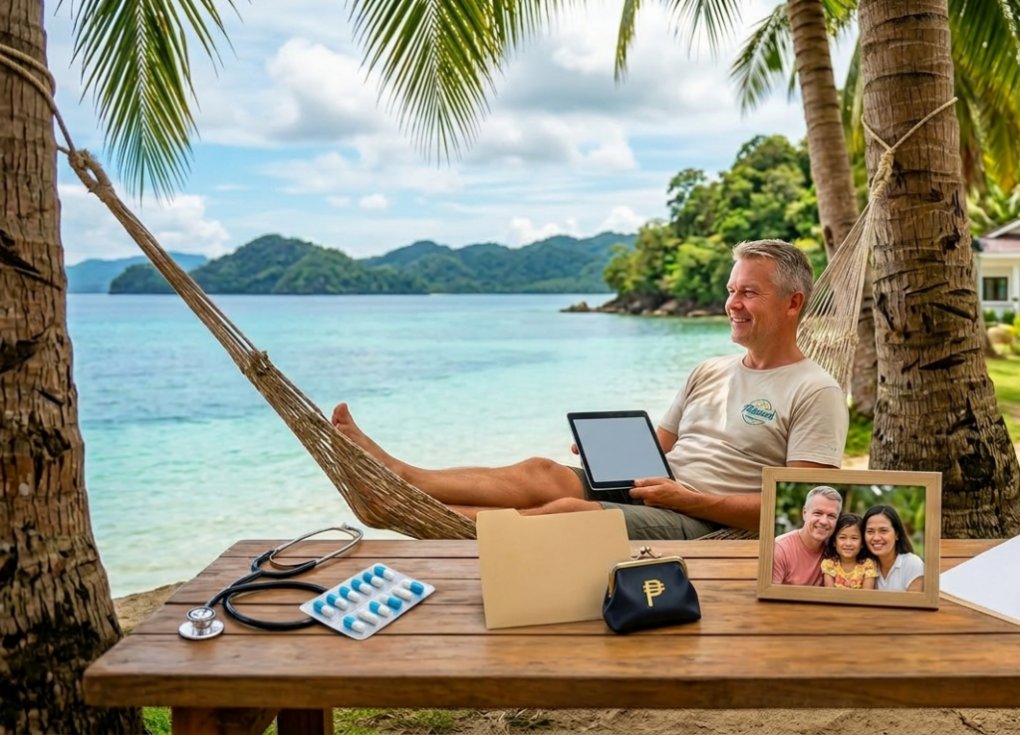
Those storm clouds may never hit you directly. Still, there are deeper, structural challenges and risks in the country that, in one form or another, tend to affect most long-term residents. Some are within your control; others are not. But any one of them might ultimately determine whether the Philippines becomes a temporary detour – or your final destination.
Healthcare
The most common reason many Westerners eventually leave the Philippines is uncertainty surrounding healthcare. The typical story goes like this: the expat lives with their fingers crossed, hoping to stay healthy and avoid accidents – relying on luck more than anything else.
Some invest in comprehensive insurance, but even that doesn’t solve the fundamental issue – quality healthcare is largely concentrated in major cities.
Insurance, by its nature, is never foolproof. It doesn’t cover every possible risk, and relying on it leaves a lingering sense of unease. That feeling is reinforced by the constant revisions and fine print adjustments insurance companies make – especially for those living outside Western safety nets.
And if you’ve built your life in a rural area or on a remote island, being forced to relocate to a big city for medical reasons means giving up the very life you came to the Philippines to live.
Visa
Many foreigners initially stay in the Philippines as tourists because it’s the easiest option. But sooner or later, the visa issue becomes unavoidable – and by then, its significance has grown in proportion to how deeply you’ve put down roots.
A more permanent life in the Philippines usually rests on some form of residency status, retirement visa, or investment visa. While requirements vary, these systems have proven relatively stable and predictable compared to systems in similar countries. Citizenship, however, is practically out of reach for most foreigners.
If your life includes a family, investments, businesses, or other strong ties, your visa becomes the bedrock of everything. Securing the right one involves paperwork, bureaucracy, and perhaps hiring professionals – but that effort is trivial compared to the misery of being forced to leave your adopted home because of a visa crisis.
Financial Situation
Living in the Philippines can be both rewarding and easy – if your income supports that lifestyle. Maintaining a Western standard of living on locally earned income is challenging, though no more so than elsewhere in Asia. On the other hand, your living environment and lifestyle can be tailored directly to how much you’re willing – or able – to spend.
“Living in the Philippines” can mean almost anything. At one end of the spectrum, it can offer a higher quality of life than the average lifestyle in Europe or North America. At the other, it can mean daily survival under less-than-comfortable conditions. Between those extremes lies an almost endless range of realities.
There’s also a sizable number of foreigners for whom the conditions for a good life never quite materialize. Some eventually decide to return to their home country.
Others stay and scrape by, convincing themselves that they’re living an “authentic” life among the locals – but over time, that illusion starts to fade. And when opportunity knocks, even the locals often leave in search of a better life abroad.
Social Connections
The Philippines is not an ideal place for people who prefer solitude. In everyday language, the word malungkot means both “lonely” and “sad” – a revealing overlap. The deeper your social connections, the more deeply you’ll root yourself in the country.
For many foreigners, social life initially revolves around a local partner. That works well – if both partners share similar social needs and preferences. But over time, most people also long for connections to their cultural background: community, hobbies, and sometimes just the simple comfort of speaking their native language.
In an ideal scenario, both partners maintain shared and independent social lives. That balance supports long-term emotional well-being. But if the relationship doesn’t last, and your social world depends entirely on it, life in your new country can suddenly lose much of its foundation.
Justice and Fairness
When things can’t be settled between people, you inevitably encounter the Philippine legal system – and quickly realize how different it is from Western ideals. Of course, law and justice are never perfectly aligned anywhere. But elsewhere, there tends to be a clearer connection between right and wrong.
In the Philippines, legal practices carry a built-in ethos: protecting the interests of citizens comes first. (Perhaps foreigners are still collectively paying for the sins of colonial history.)
Foreigners typically find themselves in the role of defendants, but the underlying dynamics don’t change much even if you are the one bringing the case. Navigating the legal system without a lawyer is extremely difficult – and sooner or later, that lawyer will demonstrate, often quite vividly, how law, justice, and money intertwine.
Unlike in some Western traditions, Filipino lawyers are not necessarily guided by the ideal of upholding the law above all. Their priority is achieving the desired outcome – sometimes by navigating, stretching, or dissecting the fine print of legal codes. And more often than not, that outcome involves the foreigner footing the bill – or leaving the country altogether.
Children’s Education
Educational options in the Philippines are limited if you want your children to receive a Western-level education. For many immigrants, this becomes a decisive factor in returning to their home country.
At the primary level, private schools are a good option – if available locally and financially feasible. Larger cities offer a range of private schools at different prices and quality tiers. In rural areas, however, public schools are often the only option. While technically free, their educational standards may fall short of what many parents hope for their children.
At higher levels, the issue mirrors healthcare: quality and availability are concentrated in the capital region. Elsewhere in the country, access to internationally recognized and respected education is limited.
The Calm Before the Storm
It would be easy to conclude by advising anyone considering a permanent move to the Philippines to prepare for these challenges – after all, preparation is both sensible and safety – two traits that define Western middle-class life. But in truth, there’s no need. These concerns only begin to creep into your mind after you’ve lived in the country long enough for them to become relevant in your own life.
Most people carry a deeply rooted belief: that you can always return home if things don’t work out – in case your new country fails to become the promised land you set out to find. Behind that belief lies an increasingly fragile assumption – that life in places like Europe is inherently safer and more secure than in distant megacities or mosquito-infested coastlines.
For now, that may still be true. But for how long?
If the fundamentals of daily life continue to move in opposite directions – improving in the Philippines while deteriorating back home – then in a world where the impossible can suddenly become possible, moving to and living in the Philippines might one day turn out to be the most rational – and safest – choice after all.
