Does the Philippines really have the world’s largest banknote? When did Filipinos first see an airplane in their own country, and where did it come from? Where and when were the highest and lowest temperatures in the nation’s history recorded?
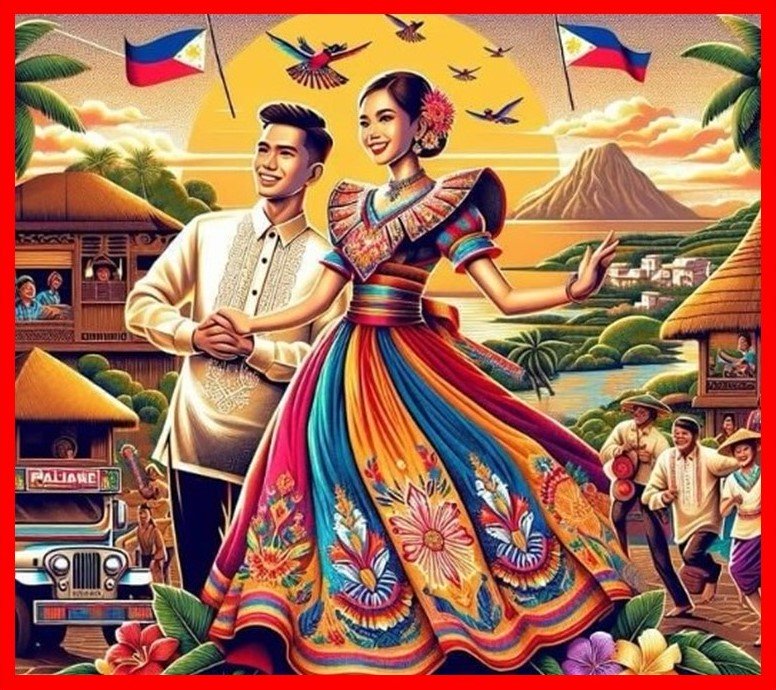
To many foreigners, the Philippines looks like an exotic tropical paradise – beautiful beaches, smiling people, constant noise, and enough strange customs to make even an Italian family reunion look emotionally restrained. That image is partly true. In such a large and chaotic country all kinds of bizarre, fascinating, glorious, and occasionally absurd things have happened.
When talking with Filipinos, dropping interesting bits of trivia about their country is an excellent icebreaker. Filipinos are always curious to see how much a foreigner knows about their homeland beyond Manny Pacquiao, beaches, and Jollibee.
This article lists 100 facts – many of which most people never learn in school – and some may surprise even Filipinos themselves.
Geography
- The Philippines has 7,641 islands; about 2,000 are inhabited. It is considered the world’s second-largest archipelago after Indonesia and the world’s sixth-largest island nation by land area.
- The official island count was previously listed as 7,107, but in 2017 an additional 534 islands were added.
- The total land area of the Philippines is about 300,000 square kilometers, roughly the size of Arizona (295,234 km²) and a bit smaller than Italy (301,340 km²).
- Mount Apo on the island of Mindanao is the country’s tallest mountain at 2,954 meters.
- The longest river in the Philippines is the Cagayan River in northern Luzon, stretching 505 kilometers.
- One of the most destructive volcanic eruptions in modern history occurred in the Philippines on June 15, 1991, when Mount Pinatubo exploded with such force that ash circled the globe.
- The largest lake in the Philippines is Laguna de Bay near Metro Manila (900 km²), making it the third-largest lake in Southeast Asia by surface area.
- The highest temperature ever recorded in the Philippines was 42.2°C (108°F), measured twice in Tuguegarao City in northern Luzon – in 1912 and again in 1969.
- The coldest temperature ever recorded was 6.3°C (43°F) in Baguio City in January 1961.
- The strongest earthquake ever recorded in the Philippines struck the Moro Gulf on August 16, 1976, reaching magnitude 8.0.
- Palawan is home to the famous Underground River, one of the world’s longest navigable underground rivers, stretching about 8.2 km.
- If you combined all the coastlines of the Philippine islands, the total length would be over 36,000 kilometers – the fifth longest coastline in the world.
- The Philippines has 24 active volcanoes, with Mount Mayon and Taal Volcano being among the most active.
- The oldest city in the Philippines is Cebu City, founded in 1565.
- The largest province by land area is Palawan (approx. 14,650 km²), which consists of about 1,780 islands.
- The smallest province is Batanes in the far north, with a total area of just 84 square kilometers.
- The largest city in the country by land area is Davao City, at 2,444 square kilometers, making it one of the world’s largest cities by administrative land area.
Plants and Animals
- Philippine rainforests contain over 500 bird species, more than one-third of which are found nowhere else on Earth.
- Over 100 mammal species in the Philippines are endemic to the archipelago.
- The Philippine eagle, also known as the monkey-eating eagle, is one of the world’s largest and rarest eagles.
- Seven of the world’s eight known species of giant clams can be found in Philippine waters.
- The Philippines has been one of the world’s hotspots for newly discovered animal species over the past decade.
- In 1934, a diver near Palawan discovered the world’s largest pearl. Weighing 6.4 kilograms, it became known as the Pearl of Allah or Pearl of Lao Tzu, and it is estimated to be worth around $40 million.
- The reticulated python (Malayopython reticulatus), the world’s longest snake, lives in the Philippines and can grow up to 9 meters long.
- The king cobra, the world’s longest venomous snake, is also found in the Philippines.
- Sampaguita (Jasmine sambac) has been the national flower since 1934.
- The national tree is Narra, sometimes called Philippine mahogany.
- The famous Zambales mango is considered one of the sweetest mango varieties in the world.
Population
- The Philippines has an estimated population of around 130 million, making it one of the 12 most populous nations in the world.
- Metro Manila (National Capital Region) is believed to have an actual population of roughly 25 million people, considerably higher than the official population figure of 13.4 million.
- The City of Manila is one of the most densely populated areas in the world (population density over 40,000 inhabitants/km²).
- The Philippines has the world’s third-largest Catholic population after Brazil and Mexico.
- Filipino and English are the country’s official languages, but more than 170 languages are spoken nationwide.
- The average height of Filipino men is around 163 cm and Filipino women around 149 cm. Basketball remains a national obsession regardless; passion, it seems, is not determined by height.
- About 11% of Filipinos live or work abroad to support their families back home.
- Santos is the country’s most common surname, followed by Reyes, Cruz, and Garcia.
- Filipinos are the third-largest Asian group in the United States (after Chinese and Indians), making up roughly one-fifth of the Asian American population.
History
- In 1521, the Portuguese explorer Ferdinand Magellan and his crew ”discovered” the Philippines, but Ruy López de Villalobos named the islands Las Felipinas after King Philip II of Spain in 1543.
- The Philippines officially became a Spanish colony in 1565 and remained under Spanish rule for 333 years.
- Manila’s Chinatown, Binondo, is the oldest Chinatown in the world, established in 1594.
- The Philippines claims to have two universities older than Harvard: the University of San Carlos (founded in 1595) and the University of Santo Tomas (founded in 1611).
- When Spain ceded the Philippines to the United States in 1898, it became America’s first major overseas colony.
- The first Philippine flag was sewn in Hong Kong by Marcela Agoncillo, her daughter Lorenza, and Jose Rizal’s niece Delfina Herbosa de Natividad.
- The Philippines once issued the world’s largest banknote ever used as legal tender – the 100,000-peso commemorative bill released in 1998.
- The Philippines became the first Southeast Asian country to gain independence after World War II in 1946.
Buildings and Infrastructure
- The first mosque in the Philippines, Masjid Sheikh Makhdum, was built in 1380 on Simunul Island in Tawi-Tawi Province.
- The Basilica del Santo Niño in Cebu City, whose current structure dates to 1735, is considered the oldest Roman Catholic church in the Philippines.
- As of 2026, the tallest building in the Philippines (318 meters) is the Metrobank Center, also known as the Grand Hyatt Manila, completed in 2017.
- The country’s first department store opened in Iloilo in 1877.
- The first air conditioner in the Philippines was installed in the presidential palace in 1936.
- The first air-conditioned shopping mall was Ali Mall in Manila, opened in 1976. The mall was named after boxing legend Muhammad Ali following his victory in the Thrilla in Manila match against Joe Frazier at the nearby Araneta Coliseum in 1975.
- The San Juanico Bridge, opened in 1973, connects the islands of Samar and Leyte and is the longest bridge in the country (2,164 meters).
- Two of the world’s largest shopping malls are located in Metro Manila: SM Megamall (floor area approx. 474,000 m2) and SM Mall of Asia (floor area approx. 590,000 m2).
- The Philippine Arena, completed in 2014 near Manila, is the world’s largest indoor arena, with a capacity of approximately 55,000 spectators.
People
- The first recorded marriage between a Filipino and a foreigner took place in 1585, when Nicolasa de Alvarez married the Spaniard Pablo Alvarez.
- The first documented Filipino serial killer was Juan Severino Mallari, a priest who murdered 57 people between 1816 and 1826. He was eventually arrested and sentenced to death by hanging in 1840.
- Gloria Diaz became the first Filipina Miss Universe winner in 1969.
- Megan Young became the first Filipina Miss World winner in 2013.
- Filipino Junrey Balawing (1993–2020), who stood only 59.93 cm tall, held the title of the world’s shortest living man from 2011 until early 2012, when Nepal’s Chandra Bahadur Dangi (54.6 cm / 21.5 inches) was officially recognized as the shortest man ever recorded.
- Investment banker and diplomat Ramon Ilusorio became the first Filipino to reach the North Pole during an expedition aboard a Soviet icebreaker.”
- Samelene Pimentel became the first Filipina to ski to the North Pole in 2015.
- Leo Oracion became the first Filipino to summit Mount Everest in 2006.
- Brillante Mendoza was the first Filipino film director to win the Best Director prize at the Cannes Film Festival for his film Kinatay in 2009.
- Maria Ressa became the first Filipino Nobel Peace Prize laureate in 2021.
Technology
- The first map of the Philippines, known as the Velarde Map, was drawn up by Jesuit Pedro Murillo Velarde, engraver Nicolás de la Cruz Bagay, and artist Francisco Suárez in 1734.
- In 1904, the trading company Estrella del Norte brought the first automobile to the Philippines, a Richard-Brasier Roadster, with a 2-cylinder engine and 9 horsepower.
- Filipinos first saw an airplane in 1911 when American pilot James “Bud” Mars flew a Mars Skylark biplane for a carnival show.
- Although the yo-yo is ancient, Filipino inventor and entrepreneur Pedro Flores patented and popularized its modern commercial version in the United States in the 1920s.
- The country’s first airline, the Iloilo-Negros Air Express Company (INAEC), began operations in 1933 on the Manila–Iloilo route.
- Philippine Airlines, founded in 1941, is Asia’s oldest airline still operating under its original name.
- The Philippine Air Force acquired Southeast Asia’s first supersonic fighter aircraft, Northrop F-5 Freedom Fighter, in 1965.
- Although the karaoke machine was invented by Japanese musician Daisuke Inoue, Filipino inventor Roberto del Rosario patented the Sing-Along System in 1975, and he is considered the only internationally recognized patent holder.
- The Philippines’ first commercial internet connection became operational on March 29, 1994.
- In 1995, asteroid 6282 Edwelda was named after Filipino couple Edwin L. Aguirre and Imelda B. Joso. The name ”Edwelda” is a blend of Edwin and Imelda.
- In 1997, the first Philippine satellite, Agila 2 (named after the Philippine eagle), was launched into space. The satellite provided digital TV services and internet connections to Philippine media and telecommunications companies.
- Filipinos send hundreds of millions of text messages and social media messages daily. At one point, the country was known as the “Texting Capital of the World.”
Politics
- In 1899, Emilio Aguinaldo became the country’s youngest president at the age of 29 when he was elected president of the First Philippine Republic (Malolos Republic).
- Rodrigo Duterte became the oldest elected president at age 71 and the first president from Mindanao.
- Fidel Ramos (1928–2022) was the first and only non-Catholic president of the Philippines.
- Ferdinand Marcos was the longest-serving president, serving for 20 years and 57 days (1965–1986), until he was driven into exile in Hawaii in 1986.
- When the Marcos family fled to Hawaii, Imelda Marcos reportedly left behind 1,060 pairs of shoes, 508 dresses, 1,000 handbags, and enough luxury items to stock a department store.
- The tallest Philippine president was Ramon Magsaysay (180 cm); the shortest was Gloria Macapagal-Arroyo (150 cm).
- Philippine presidents have included a lawyer, a military officer, an economist, an actor, an engineer, a housewife, and several career politicians – which explains quite a lot about the country’s political history.
National Achievements and Records
- On January 18, 2015, more than 6 million Filipinos gathered in Manila to see Pope Francis – the largest crowd ever recorded for a papal event.
- The Philippines is one of the world’s largest sources of trained nurses. Around 25% of nurses working overseas are believed to be Filipino.
- In 2006, the Philippines set a world record for mass breastfeeding event when thousands of mothers breastfed at the same time in Manila.
- Filipino journalist Carlos P. Romulo became the first Asian Pulitzer Prize winner in 1942.
- Jollibee is the Philippines’ largest fast-food chain. It started as a humble ice cream parlor before conquering the nation with fried chicken, spaghetti, and the kind of emotional loyalty usually reserved for religion or sports teams.
Sports
- The first Filipino Olympic medalist was Teofilo Yldefonso, who won bronze in the men’s 200-meter breaststroke at the 1928 Summer Olympics in Amsterdam.
- Hidilyn Diaz won the Philippines’ first Olympic gold medal at the Tokyo Olympics in women’s weightlifting in 2021.
- Manny Pacquiao is the only boxer in history to win world titles in eight different weight divisions.
- Chess grandmaster Eugene Torre was the first Filipino to be inducted into the World Chess Hall of Fame for his contributions to chess.
- The Philippine Basketball Association, founded in 1975, is one of the world’s oldest professional basketball leagues outside the NBA.
- In 2014, the longest basketball game ever played lasted over 120 hours in the Philippines. It was a Guinness World Record charity marathon game.
- The largest recorded attendance for a FIBA Basketball World Cup game occurred in the Philippines in 2023 at the Philippine Arena for the Philippines vs. Dominican Republic game.
Customs and Culture
- Some Filipinos avoid staircases whose number of steps is divisible by three because the third step symbolizes death.
- In rural areas, burying a newborn baby’s placenta remains a traditional custom. Families often bury it together with symbolic items representing hopes for the child’s future.
- The Philippines is the only country in the world whose flag is officially flown upside down during wartime.
- Filipinos celebrate the world’s longest Christmas season, which begins in September and lasts until January.
- The first Tagalog-language opera was Sang Dugong Panaginip (A Blood Compact in a Dream), composed by Ladislao Bonus, which premiered in 1902 at the Zorrilla Theater in Manila.
Read More:
The Philippines – Myths, Stereotypes, and Misconceptions (Part 1)
The Philippines – Myths, Stereotypes, and Misconceptions (Part 2)
