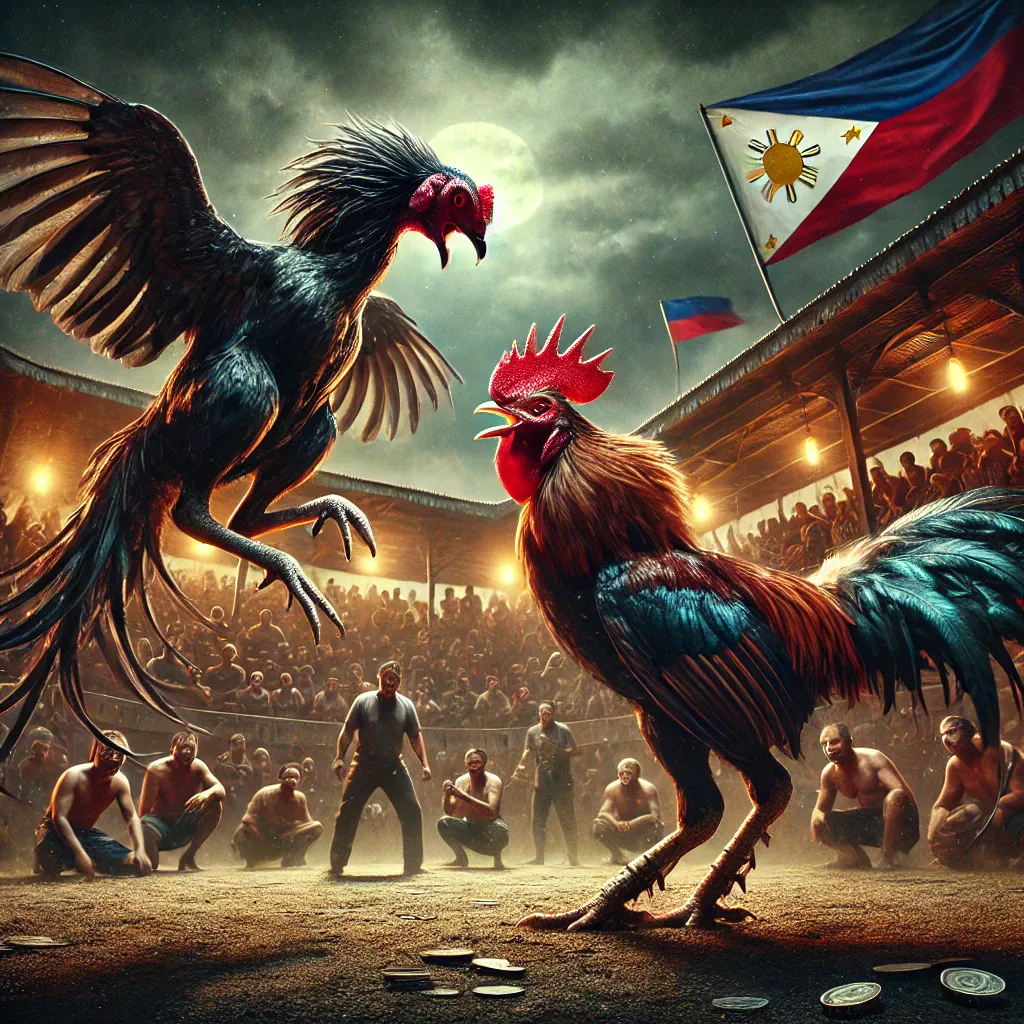
Cockfighting is no peaceful Sunday stroll through the chicken coop. It is a blood-pumping cultural spectacle where a spectator’s heart rate can rise almost as quickly as the stakes.
Cockfighting, locally known as sabong, is not merely a strange relic of darker times in which animals were made to fight for human amusement. It is also a multibillion-peso industry that brings together everyone from ordinary working people to some of the country’s wealthiest businessmen.
And fighting cocks are certainly not your average backyard roosters, wandering around looking for something edible and announcing the sunrise several hours too early. These birds are elite athletes. They are raised on specialized farms, fed carefully designed high-protein diets, and put through strict training programs – and some of them probably get more massages than you do.
The finest fighting cocks even have their own personal trainers. And these are not enthusiastic amateurs who watched three YouTube videos and suddenly became experts. They are highly paid professionals who stand beside the arena encouraging their protégés as if they were coaching an athlete in an Olympic final: “One more flap! Attack! You’re a champion!”
The Fastest Combat Sport in the World
Cockfighting is a fast and bloody spectacle that moves almost too quickly for the human eye to follow. Two magnificent fighting cocks enter the arena, their plumage gleaming like evening gowns under the lights of a beauty pageant. But don’t let the feathers fool you – these gentlemen are not here to pose for photographs.
Before the fight, a small but razor-sharp blade or spur called a tari is attached to a rooster’s leg. Attaching it correctly requires almost surgical precision. One tiny mistake can ruin months of preparation and turn a champion into a sacrificial offering.
The shouts of the bettors, the cheers of the crowd, and the cries of the birds merge into one chaotic wall of sound. Then the referee releases the roosters. Everything seems to freeze. Seconds seem to stretch into minutes as the shouting becomes frantic. “Laban! Laban!” – “Fight! Fight!”
For a moment, the atmosphere feels like a Manny Pacquiao championship bout. The roosters leap at each other, beaks striking and blades slashing. Usually, the fight is over within a few dozen seconds. If it drags on until both birds are exhausted and can barely remain standing, the fight may be stopped, and the result declared a draw.
Sometimes one rooster decides that discretion is the better part of valor and runs squawking around the arena. The referee then picks up both birds and brings them together again, giving the reluctant gladiator another opportunity to reconsider his career choices.
When it is over, one rooster may be lying motionless on the ground. And that is it. It is all over in a flash, so quickly that hardly anyone in the audience can really tell what happened between the two roosters. For an outsider, it can be difficult to understand the sheer passion and excitement that sabong inspires among Filipinos.
A National Obsession
Long before the Spanish arrived, Filipinos were already holding cockfights, which were associated with ritual and the supernatural. When the Spaniards arrived in the sixteenth century, they took one look at the spectacle and apparently concluded: “This could use organized gambling and taxation.” From then on, sabong became more than a tradition. It became something close to a national obsession.
The bloodlines of prized fighting cocks can stretch back generations. The birds are pampered like a balikbayan, an overseas relative who comes home from America with dollars in his pockets. They receive special food, vitamins, careful conditioning, and intensive training until they are mature and ready for the arena.
Cock breeders and enthusiasts, commonly known as sabongeros, treat their birds like professional sports trainers treat their athletes. They know every muscle, nerve, habit, and movement of their birds. A breeder may feed his rooster better than his children and pamper it more extravagantly than his wife. It is not unheard of to see a sabongero standing on a bus while his rooster sits comfortably in its own seat.
Ruthless Rules
The basic rules of cockfighting are brutally simple. There are no rounds, no comforting time limits, no bell to save anyone, and no referee stopping the fight just because it is getting brutal. There is simply a fight for survival.
The legal framework governing sabong is largely based on Presidential Decree No. 449, the Cockfighting Law of 1974. In practice, regulations and local rules govern when, where, and how legal cockfights may take place. Traditional and commonly applied rules and practices include:
- Only males – roosters – enter the fight. A hen may rule the backyard with an iron beak, but she is not invited into the arena.
- Fighting cocks are expected to be healthy, conditioned, and specifically bred and trained for combat.
- A razor-sharp blade or spur is attached to one leg.
- Opponents are matched as evenly as possible, traditionally according to factors such as weight and fighting characteristics.
- The referee, or sentensyador, supervises the fight and makes the final decision – ensuring that both contestants receive a fair opportunity for glory or death.
- The fight continues until one rooster can no longer fight or is killed.
- If neither rooster is able or willing to continue, the result may be declared a draw.
- If both birds die without a winner being determined, the fight may also end in a draw.
- Bets are arranged around the fight according to established betting practices.
- Bet takers known as kristos communicate wagers through a remarkable system of hand signals and shouted odds.
Alongside licensed cockfights, illegal fights known as tupada are also held, particularly in rural areas and poorer urban communities. There, the rules can become considerably more flexible.
When Money Grows Wings
Breeders and spectators alike place wagers, and the sums can range from loose change to amounts large enough to buy a house – or, in extreme cases, enough land to start calling yourself a property developer.
Betting is not regarded by serious enthusiasts as mere random gambling. It is an art, a science, and occasionally something resembling theology. There is an old joke in the Philippines that cockfighting bets are among the few agreements in the country that are always honored.
The most dedicated bettors know everything about the birds: bloodlines, diet, previous performance, temperament, and sometimes even astrological compatibility. Every detail can matter. In the world of sabong, even what a rooster had for breakfast can become evidence supporting an investment strategy.
Bettors traditionally back either meron, the favorite, or wala, the underdog, the opposing side, with the odds moving according to how the money is distributed. There is little room for diplomatic compromise. You are either backing the winner or financing somebody else’s dream.
Every bettor picks a favorite, and the stakes can become painfully high. Homes have been lost, motorcycles pawned, and more than one gambler has made the long journey home carrying nothing but regret and newly acquired debt.
Ethical, Legal, or Illegal?
Although sabong is deeply rooted in Philippine culture, opposition to it has grown. Animal welfare advocates condemn the practice, while supporters defend it as an ancient tradition that existed long before the Spanish arrived with their laws, taxes, paperwork, and talent for regulating almost everything.
The government’s position on cockfighting can seem contradictory. The law restricts cockfighting on paper, yet licenses it in practice. Cockfighting is legal in the Philippines, but only within a regulated framework. Legal fights take place in licensed cockpits under rules governing their operation. The result is about as “ethical” as a contest between two armed bundles of feathers can realistically be.
Animal cruelty is prohibited under Philippine law, which creates an obvious paradox when applied to animals specifically bred and trained to fight. But wherever rules exist, people will find ways around them.
Authorities continue to try to suppress illegal cockfights and unlawful gambling. Considering the depth of the tradition, however, eliminating underground sabong can sometimes look about as easy as stopping a typhoon with your bare hands.
To many Westerners, cockfighting is simply animal cruelty turned into entertainment. To many Filipinos, however, it remains part of ordinary social and cultural life. Its economic, cultural, and social importance is substantial enough that calls for its complete abolition are unlikely to make the tradition disappear anytime soon.
A Livelihood – and an Extension of the Ego
For many Filipino families, fighting cocks are not merely a hobby. They can also provide an additional source of income. Everywhere you look, men can be seen lovingly carrying roosters in their arms.
Roosters seem to be everywhere. They stand outside houses and along village roads, beside cockpits, in crowded neighborhoods, on buses, near stores, and occasionally in places where no reasonable person would expect to encounter livestock.
To the breeder, a rooster is not merely a rooster. It can also be an extension of the owner’s ego – a feathered representative capable of bringing money, friendship, prestige, success, and influence.
There is serious money in cockfighting. The broader industry and its associated betting economy have been estimated to be worth billions of pesos. Ordinary Filipinos, however, rarely gamble enormous amounts. Even 500 pesos – roughly nine US dollars – can be a significant wager for an average bettor.
For roughly the same amount, one might buy a cheap bird, while proven fighting cocks can cost tens of thousands of pesos. Exceptional champions and prized breeding birds inhabit an entirely different economic universe, where the normal rules of chicken pricing cease to apply.
At the top of the sport are major annual tournaments, or derbies, which attract the elite of the cockfighting world: famous breeders, trainers, gamblers, businessmen, and sometimes wealthy participants from elsewhere in Asia.
Major competitions such as the Bakbakan and the World Slasher Cup are full-scale spectacles. Politicians, celebrities, and business figures may appear among the spectators, while individual wagers can climb into the hundreds of thousands of pesos.
The Future of the Feathered Gladiators
The future of cockfighting in the Philippines may still look as bright as the midday sun over Boracay, but there are clouds on the horizon.
The tradition remains deeply embedded in Philippine society, yet changing social values and growing concern for animal welfare are placing increasing pressure on it. Several local advocacy groups are also calling for cockfighting to be abolished. So far, many enthusiasts respond to such demands with roughly the same expression they might wear if someone suggested abolishing them, rather than their roosters.
One day, cockfighting might evolve into something more humane. Perhaps we will have virtual cockfights in which AI roosters slash each other to pieces without spilling a single drop of blood – only code, algorithms, and wounded digital pride.
But then another question arises: would that still make a sabongero’s heart race? Would that still make a sabongero’s heart race? One thing, however, seems certain. The Philippines without cockfighting would be like karaoke without anyone singing their heart out – technically possible, perhaps, but emotionally almost unimaginable.
