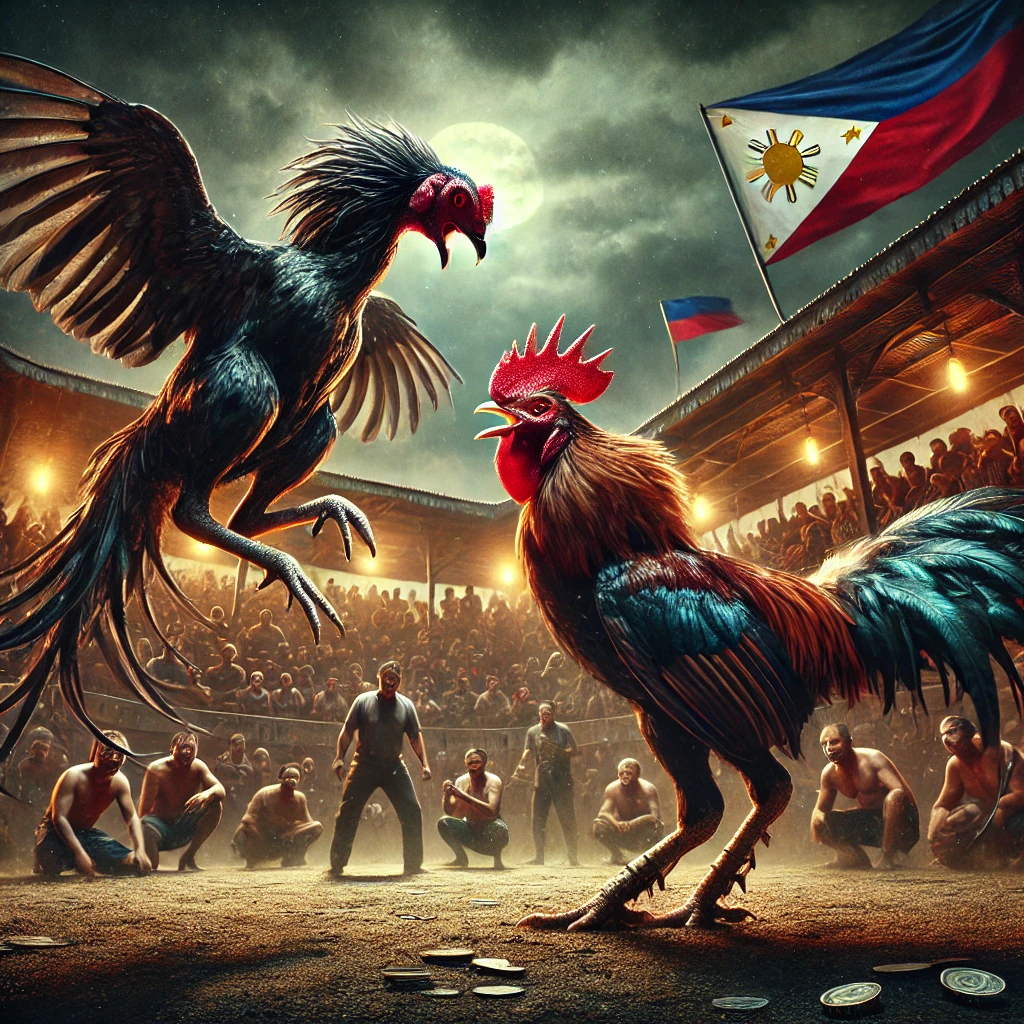
Cockfighting is no peaceful Sunday stroll through the chicken coop. It is a heart-pounding cultural spectacle where a spectator’s heart rate can rise almost as quickly as the stakes.
Cockfighting, locally known as sabong, is far more than a strange relic of darker times in which animals were made to fight for human amusement. It is also a multibillion-peso industry that brings together everyone from ordinary working people to some of the country’s wealthiest businessmen.
And fighting roosters are certainly not your average backyard roosters, wandering around looking for something edible and announcing the sunrise several hours too early. These birds are elite athletes. They are raised on specialized farms, fed carefully designed high-protein diets, and put through strict training programs – and some of them probably get more massages than you do.
The finest gamecocks even have their own personal trainers. And these are not enthusiastic amateurs who watched three YouTube videos and suddenly became experts. They are highly paid professionals who stand at the edge of the arena, encouraging their protégés as if they were coaching an athlete in an Olympic final: “One more flap! Attack! You’re a champion!”
The Fastest Combat Sport in the World
Cockfighting is a fast and bloody spectacle that unfolds almost too quickly for the human eye to follow. Two magnificent fighting cocks enter the arena, their plumage shimmering like sequined evening gowns under beauty pageant lights. But don’t let the feathers fool you – these gentlemen are not here to pose for photographs.
Before the fight, a small but razor-sharp blade or spur called a tari is attached to a rooster’s leg. Attaching it correctly requires almost surgical precision. One tiny mistake can ruin months of preparation and turn a champion into a sacrificial offering.
The shouts of the bettors, the cheers of the crowd, and the cries of the birds merge into one chaotic wall of sound. Then the referee releases the roosters. For the spectators, time seems to stand still. Seconds stretch into minutes as the shouting turns frantic. “Laban! Laban!” – “Fight! Fight!”
For a moment, the atmosphere feels like a Manny Pacquiao championship bout. The roosters leap at each other, their beaks striking and blades slashing. Usually, the fight is over within a few dozen seconds. If it drags on until both birds are exhausted and can barely remain standing, the fight may be stopped and declared a draw.
Sometimes one rooster decides that discretion is the better part of valor and runs squawking around the arena. The referee then picks up both birds and brings them together again, giving the reluctant gladiator another opportunity to reconsider his career choices.
When it is over, one rooster is often lying motionless on the ground. It all happens in a flash, so quickly that hardly anyone in the audience can really tell what happened between the two roosters. For an outsider, it can be difficult to understand the sheer passion and excitement that sabong inspires among Filipinos.
A National Obsession
Long before the Spanish arrived, Filipinos were already holding cockfights, which were associated with ritual and the supernatural. When the Spaniards arrived in the sixteenth century, they took one look at the spectacle and apparently concluded: “This could use organized gambling and taxation.” From then on, sabong became more than a tradition. It became something close to a national obsession.
The bloodlines of prized gamecocks can stretch back generations. The birds are treated like balikbayans – Filipinos returning home from overseas – with pockets full of dollars and a welcome fit for royalty. They receive special food, vitamins, careful conditioning, and intensive training until they are mature and ready for the arena.
Cock breeders and enthusiasts, commonly known as sabongeros, care for their birds with the dedication of professional sports trainers preparing elite athletes. They know their birds inside out – every muscle, every habit, and every movement.
A breeder may feed his rooster better than his children and pamper it more extravagantly than his wife. It is not unheard of to see a sabongero standing on a bus while his rooster sits comfortably in its own seat.
Ruthless Rules
The basic rules of cockfighting are brutally simple. There are no rounds, no bell to save a battered fighter, and no timeout just because the blood starts flowing. There is simply a fight for survival.
The legal framework governing sabong is largely established by Presidential Decree No. 449, the Cockfighting Law of 1974. In practice, regulations and local rules govern when, where, and how legal cockfights may take place. Traditional and commonly applied rules and practices include:
- Only male chickens – roosters – enter the fight. A hen may rule the backyard with an iron beak, but she is not invited into the arena.
- Gamecocks are expected to be healthy, conditioned, and specifically bred and trained for combat.
- A razor-sharp blade or spur is attached to one leg.
- Opponents are traditionally matched as evenly as possible based on factors such as weight and fighting ability.
- The referee, or sentensyador, supervises the fight and makes the final decision – ensuring that both contestants receive a fair opportunity for glory or death.
- The fight continues until one rooster can no longer fight or is killed.
- If neither rooster can or will continue fighting, the match may be declared a draw.
- If both birds die without a winner being determined, the fight may also end in a draw.
- Bets are arranged around the fight according to established betting practices.
- Bet takers known as kristos use a remarkable system of hand signals and shouted odds to communicate and record wagers.
Alongside licensed cockfights, illegal fights known as tupada are also held, particularly in rural areas and poorer urban communities. There, the rules can become considerably more flexible.
When Money Grows Wings
Breeders and spectators alike place wagers, and the sums can range from loose change to amounts large enough to buy a house – or, in extreme cases, enough land to start calling yourself a property developer.
Serious enthusiasts don’t see betting as a mere game of chance. It is an art, a science, and occasionally something resembling theology. There is an old joke in the Philippines that cockfighting bets are among the few agreements in the country that are always honored.
The most dedicated bettors know everything about the birds: bloodlines, diet, previous performance, temperament, and sometimes even astrological compatibility. Every detail can matter. In the world of sabong, even what a rooster had for breakfast can become evidence supporting an investment strategy.
Bettors traditionally back either meron, the favorite, or wala, the underdog, with the odds shifting as bettors put their money on either side. There is little room for diplomatic compromise. You are either backing the winner or financing somebody else’s dream.
Every bettor picks a side, and the stakes can become painfully high. Homes have been lost, motorcycles pawned, and more than one gambler has made the long journey home carrying nothing but regret and newly acquired debt.
Ethical, Legal, or Illegal?
Although sabong is deeply rooted in Philippine culture, opposition to it has grown. Animal welfare advocates condemn the practice, while supporters defend it as an ancient tradition that existed long before the Spanish arrived with their laws, taxes, paperwork, and talent for regulating almost everything.
The government’s position on cockfighting can seem contradictory. The law allows licensed cockfighting while also prohibiting animal cruelty. Cockfighting is legal in the Philippines, but only within a regulated framework. Legal fights take place in licensed cockpits under rules governing their operation. The spectacle is about as “ethical” as a contest between two armed bundles of feathers can realistically be.
Animal cruelty is prohibited under Philippine law, which creates an obvious paradox when applied to animals specifically bred and trained to fight. But wherever rules exist, people will find ways around them.
Authorities keep trying to suppress illegal cockfights and unlawful gambling. Considering the depth of the tradition, however, eliminating underground sabong can sometimes look about as easy as stopping a typhoon with your bare hands.
To many Westerners, cockfighting is simply animal cruelty turned into entertainment. To many Filipinos, however, it remains part of ordinary social and cultural life. Its economic, cultural, and social importance is substantial enough that calls for its complete abolition are unlikely to make the tradition disappear anytime soon.
A Livelihood – and an Extension of the Ego
For many Filipino families, fighting cocks are more than a hobby. They can also provide an additional source of income. Everywhere you look, men carry their prized roosters lovingly in their arms.
You find these men and their roosters outside houses, along village roads, beside cockpits, in crowded neighborhoods, on buses, near stores – and occasionally in places where livestock is the last thing you would expect to see.
To the breeder, a rooster is rarely just a rooster. It can also be an extension of the owner’s ego – a feathered representative capable of bringing money, friendship, prestige, success, and influence.
The financial stakes in cockfighting are massive – the industry, including its vast betting market, is estimated to be worth billions of pesos. Ordinary Filipinos, however, rarely gamble enormous amounts. Even 500 pesos – roughly nine U.S. dollars – can be a significant wager for an average bettor.
For roughly 500 pesos, you might buy an inexpensive rooster, while proven gamecocks can cost tens of thousands of pesos. Exceptional champions and prized breeding birds inhabit an entirely different economic universe, where the normal rules of chicken pricing cease to apply.
At the top of the sport are major annual tournaments, or derbies, which attract the elite of the cockfighting world: famous breeders, trainers, gamblers, businessmen, and sometimes wealthy participants from elsewhere in Asia.
Major competitions such as the Bakbakan and the World Slasher Cup are full-scale spectacles. Politicians, celebrities, and business figures may appear among the spectators, while individual wagers can climb into hundreds of thousands of pesos.
The Future of the Feathered Gladiators
The future of cockfighting in the Philippines may still look as bright as the midday sun over Boracay, but there are clouds on the horizon.
The tradition remains deeply embedded in Philippine society, yet changing social values and growing concern for animal welfare are placing increasing pressure on it. Several local advocacy groups are also calling for cockfighting to be abolished. So far, many enthusiasts react as if someone had just proposed abolishing their right to breathe.
One day, cockfighting might evolve into something more humane. Perhaps we will have virtual cockfights in which AI roosters slash each other to pieces without spilling a single drop of blood – only code, algorithms, and wounded digital pride.
But then another question arises: Would that still make a sabongero’s heart race? One thing seems certain, though: a Philippines without cockfighting would be like a karaoke bar where nobody dares to sing their heart out – technically possible, perhaps, but emotionally almost unimaginable.
