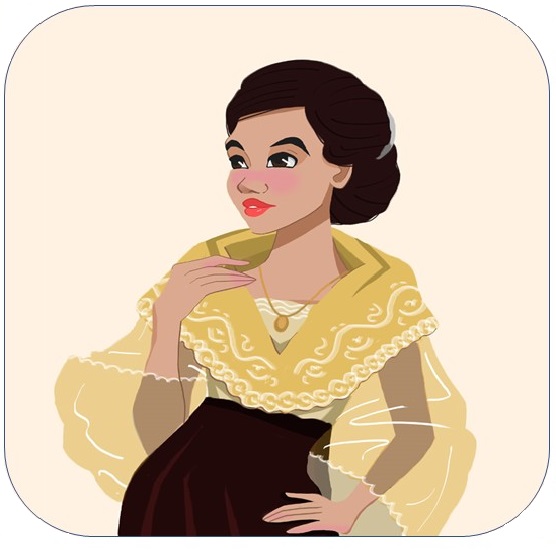
Scroll through any Facebook group about the Philippines long enough, and you’ll eventually find the same question popping up again and again: “What’s it like to have a Filipina wife?” The answers usually range from “Best decision of my life” to “Bro, you have no idea…” – often followed by a mix of admiration, confusion, and the occasional emotional damage.
The question of what it means to have a Filipina wife is as broad as the answers it usually produces. Still, it serves as a good example of our natural urge to generalize and put people into neat categories. “Filipina wife” is a label that describes a group based on three shared traits: they are native-born citizens of the Philippines, they are women, and they are married.
On those three points, Filipina wives fit that definition perfectly. But beyond that, the shared characteristics begin to fade quickly. The idea of a Filipina wife is ultimately about individual women, each with her own version of what the label means.
Some are soft-spoken, others could run a small country if given the chance. Some love quiet evenings at home; others treat karaoke like a competitive sport. Trying to define a “Filipina wife” in one sentence is a bit like trying to explain Filipino traffic rules – technically possible, but reality will quickly prove you wrong.
A Filipina Wife Is in a Category of Her Own
When evaluating what makes Filipina wives “distinct,” personal traits and cultural influences are often confused. A wife’s bad mood, for example, may be blamed on Filipino culture when it might simply be a momentary expression of her personality.
Generalizations are further complicated by differences in family background, education, and life experience. Highly educated women often approach the role of a wife in ways that are more in line with Western norms than women raised in more traditional environments. Work experience and exposure to different ways of life also reshape how marriage and partnership are understood.
A Filipina wife’s identity may also shift depending on whether she lives in the Philippines or abroad. In Europe and the United States, Filipina wives are rarely viewed in a completely neutral light – and perhaps objectivity isn’t even expected. They carry their cultural heritage with them, and being Filipina is an essential part of who they are.
This has nothing to do with the tired fantasy of a submissive, exotic woman who “rescues” a Western man disillusioned with the modern dating scene. Like wives everywhere, every Filipina wife has her own personality – strengths and flaws alike. But if we set aside individual quirks, is there anything cultural that still connects them?
The following five traits are ones many men may recognize in their Filipina wives. No single wife – mine included – is used as an example here; the following features are just general observations.
• The Importance of Family
One of the clearest cultural differences lies in the concept of family. In the Philippines, people grow up in a tradition where close family ties are not only the foundation of social life but also a safety net.
For a Filipina wife, encountering the more individualistic nuclear family model common in most Western countries can initially feel confusing. In the West, relationships with relatives are often maintained more by choice than obligation.
These different views of family play out in countless ways in everyday life. But one thing is certain: a Filipina spouse places a high value on family well-being and caregiving as essential elements of a good life.
For a Western husband, this might first become real during something as simple as a video call – where “say hi to my family” turns out to include not just parents, but siblings, cousins, neighbors, and possibly someone holding a rooster in the background. It’s not chaos – it’s connection.
• Supporting the Family
Sooner or later, most relationships with a Filipina partner will face the issue of supporting her extended family financially – and navigating the unwritten rules that come with it. In most marriages, helping the wife’s family happens with mutual understanding. Occasionally, though, support may even flow the other way – especially if her family happens to have a ”money tree” growing in their backyard.
In Filipino culture, social and financial responsibilities are tightly intertwined. Family and relatives form a network where both favors and money function as currency. This may be difficult for Westerners to understand, as debts and reciprocity are usually clearly defined only in terms of money.
In the Philippines, obligations tend to be more flexible and informal. A favor is repaid with a favor, sometimes in cash, sometimes not. These responsibilities are handled according to one’s ability and resources. The challenge is that “ability” and “resources” can be interpreted differently, which may create tension when expectations don’t align across cultures.
To a Westerner, it can sometimes feel like the definition of “emergency” is… flexible. But from the Filipina perspective, helping family isn’t a burden – it’s simply what decent people do when they’re able.
• Gender Roles
Filipinos still live within traditional gender roles, and a Western man will notice this in everyday life. A wife may naturally take on responsibilities such as cleaning, managing the household, and cooking – without needing to formally divide tasks.
Marriage to a Filipina is usually equal, but in a different way than in many Western societies – especially in the Nordic countries – where equality often means carefully splitting chores down the middle. The Filipina perspective leans more toward practicality: each person does what they’re best at or feels naturally responsible for.
This should not be misunderstood. It’s not about submission or power imbalance. A Filipina woman is not offended by being seen or treated as traditionally feminine, nor does it cause her to question her identity. Most Filipina wives appreciate clarity in roles and responsibilities – it saves everyone from arguing over who forgot to take out the trash.
While a Nordic couple might negotiate who loads the dishwasher with the precision of a labor agreement, a Filipina wife will often just get things done – and expect the same practical attitude in return. Less discussion, more action.
• Tampo
When the connection in the relationship temporarily drops offline, a Filipina wife may pull out a unique relationship tool: tampo. It’s her way of expressing hurt while preventing a disagreement from spiraling out of control.
Experienced husbands eventually learn that tampo is not a problem to solve – it’s a situation to survive, as logic shuts down, communication stalls, and the wife appears unwilling to resolve anything through discussion. The correct response is rarely logic. It’s patience, a bit of humility, and occasionally food.
Tampo usually ends only when the man takes the initiative – apologizing and showing a willingness to reconcile, regardless of who started the conflict. This doesn’t necessarily mean he was wrong; it simply reflects his role as the one expected to repair the emotional bridge.
Despite how frustrating it can be, tampo follows its own kind of emotional logic. By withdrawing and going quiet, the wife avoids saying things in anger that she might later regret. It’s a surprisingly wise way of calling a timeout on overheated emotions – before the argument escalates to a point where even a judge would struggle to tell where the relationship ends and something more serious begins.
• Anniversaries and Special Occasions
A Filipina wife does not forget important dates – and her husband won’t escape the consequences if he does. If a man shrugs off these occasions or ignores them completely, the illusion of unconditional love might suddenly give way to crystal-clear vision.
Simply remembering the dates isn’t enough. Words must turn into action. At a minimum, a husband should acknowledge anniversaries and birthdays – especially those of his wife and children – unless he wants to trigger an emotional explosion that leaves the atmosphere at home frozen for days.
Forgetting an anniversary doesn’t just create a problem – it creates a timeline. And that timeline may be brought up again… years later… with impressive accuracy.
Keys to Happiness
More and more Western men already know what it is like to have a Filipina wife. About 20,000 Filipina women marry foreign men each year and move abroad to join their partners. The single biggest factor behind this trend is the rise of online dating, where English-speaking and effortlessly charming Filipinas have a clear advantage.
It is reasonable to predict that the number of marriages between Filipino women and Western men will continue to rise. The foundations of happiness in these two worlds complement each other: in the West, everyday joy can sometimes seem surprisingly scarce, while in many parts of Asia, where smiles come more easily, material living conditions can still be limited.
In other words, both sides have something to give and something to gain. The path to happiness in a relationship is so unpredictable that even marriage to a Filipina wife becomes something of a gamble – where the potential rewards are tremendous, but the risks can feel overwhelmingly high.
But if you reach the point where you understand each other – not perfectly, but well enough – then you’ve got something rare. Then it’s time to put on “Livin’ on a Prayer” by Bon Jovi and sing together: “We’ve got each other and that’s a lot for love, we’ll give it a shot.”
More on the topic:
Wife from the Philippines (part 1) – What is a Filipino wife like?
Wife from the Philippines (part 2) – Where to find a Filipino wife?
